

Categories
Community RBCG News

New and Improved plots!

This project was made possible thanks to the support of the Woollahra Council Environmental Grant.

You may have noticed we’ve been busy upgrading our garden plots. After more than 10 years of constant use, many of the original structures were beginning to show their age — with some even being slowly reclaimed by insects, weather, and time.

Rather than simply replacing the old plots like-for-like, we saw an opportunity to rethink how they work for our community.

The upgraded design introduces a steel post system with removable sleepers, making it easier to inspect for damage and replace sleepers as needed, rather than rebuilding from scratch. Sleepers just slide in and out! No screws needed!

It’s a big job, and we’re not getting any younger, so we hope this method makes it that much easier for us in 10 years’ time, and for future Rose Bay Community Gardeners.

It also restores deeper, double-level beds — meaning more soil, improved drainage, and ultimately more productive, “supercharged” growing conditions.

The results are already promising, with upgraded plots showing strong, healthy growth!

These changes also reflect what matters most to us: the plots are not just for growing food, but for people. They double as informal seating areas for accessible gardening, workshops, and having a yarn with neighbours. This social aspect is just as important as the food we grow, especially in a shared community space.

So pop in and see us sometime! Our monthly working bee, on the 3rd Sunday of each month, is a great chance to meet members, get a feel for the garden and find out more about getting involved.

Categories
Community Recipes

Pickle it!

Notes from our recent pickling workshop hosted by Michelle…

Cold vs Hot Pickling

Cold Pickling (Quick Pickling):

  • Fast and easy
  • Vegetables are covered in a vinegar-based brine and stored in the fridge
  • Ready in hours to a couple of days
  • Best for crisp textures and fresh flavours

Hot Pickling:

  • Involves heating the brine and pouring it over vegetables
  • Helps preserve food for longer periods
  • Often used for shelf-stable storage (when done properly)
  • Produces deeper, more developed flavours

What Can We Pickle?

Almost anything! We’ll focus on common garden produce like:

  • Cucumbers
  • Carrots
  • Radishes
  • Onions
  • Cabbage

But you can also pickle beans, cauliflower, zucchini—even fruit.

Flavour Building – Herbs & Spices

This is where creativity comes in. A basic brine becomes something special with the right additions:

  • Spices: black peppercorns, mustard seeds, fennel seeds
  • Aromatics: garlic, ginger
  • Herbs: dill, bay leaves, thyme
  • Extras: chilli, citrus peel, sugar for balance

Everyone can experiment to create their own signature flavour.

Basic Method & Equipment

A few key principles to keep things safe and effective:

  • Use non-reactive equipment (glass, stainless steel, or food-safe plastic)
  • Avoid aluminium or copper, which can react with vinegar
  • Start with a simple brine:
    • Vinegar
    • Water
    • Salt
    • Optional sugar

Basic steps:

  1. Wash and chop your vegetables
  2. Pack into clean jars
  3. Add spices and flavourings
  4. Pour over brine (hot or cold, depending on method)
  5. Store appropriately (fridge or sealed for longer storage)

Simple Recipes to Get Started

Quick Pickled Cucumbers

  • 1 cup vinegar
  • 1 cup water
  • 1 tbsp sugar
  • 1 tsp salt
  • Sliced cucumbers, garlic, dill

Combine brine, pour over cucumbers, refrigerate. Ready in a few hours.

Pickled Carrots with Fennel & Pepper

  • 1 cup vinegar
  • 1 cup water
  • 1 tsp salt
  • 1 tsp fennel seeds
  • ½ tsp black peppercorns
  • Carrot sticks

Heat brine, pour over carrots and spices. Cool and refrigerate.

Quick Pickled Red Onions

  • 1 cup vinegar
  • 1 tbsp sugar
  • 1 tsp salt
  • Sliced red onions

Pour warm brine over onions. Ready in 30–60 minutes.

Thanks for spending the morning with us 🙂

Categories
Community

Music in the Garden

Highlights from our 2026 ukulele singalong

A Woollahra Festival of Fun / Neighbour Day event

It was a beautiful day of making music together.

The smiles say it all!

Thank you to everyone who made the day so special.

PHOTOS COURTESY OF
MONIQUE HARMER & SKENNEDYWHITE

Categories
Recipes

Elderflower cordial and wine

A most delicious of summer drinks
Elderflower ‘Champagne’ is such a refreshing, effervescent drink, and it’s almost free. The flowers taste best picked early on a dry day and be used straight after picking. The cream-coloured heads (or umbels) are tastier than the white.

Diluted with water or soda, served with lemon and mint, elderflower cordial is just the thing for a summer’s day. It can also make a refreshing sorbet or tasty gin mixer.

Elderflower cordial

Ingredients

8-10 elderflower heads
2L water
1kg raw sugar (you can reduce this to 750g if you like it sour)
1 lemon peel and the sliced in rounds (you can add a lime if you like)
2 tbsp citric acid
Lemon verbena leaves – to add even more lemony zing

Method

Bring water and sugar to the boil, when all the sugar is dissolved turn off the heat. Immediately add all other ingredients. Stir and cover for 24 hours, stirring occasionally.

Strain through muslin, squeezing the flowers and lemon, into a bowl then use a jug to pour into sterilised bottles, store the bottles in the fridge.

Elderflower ‘Champagne’

Ingredients

8 large elderflower heads
9L water
1kg sugar
4 lemons
4 tbsp mild white wine vinegar

Method

Dissolve the sugar in boiling water, leave to cool and add the elderflowers, the juice of two of the lemons, slices of the other two and the vinegar. Cover with a cloth and leave for a day. Strain with muslin in a fine sieve, squeezing the flowers. Store in screw-top bottles. It’ll be ready in about a fortnight and should be drunk within a month.

Folklore

  • Elderflower – Sambucus nigra
    To fell a tree without suitable protection could free a spirit called the Elder Mother to take her revenge
  • The elderflower was said to be a protection against witches, and a knotted twig kept in the pocket was a charm against rheumatism
  • Elderflowers were apparently never struck by lightning, and a cross of elder fastened above stables would protect the animals from evil Medicinal benefits
  • Elderflower cordials and elderberry wines are high in vitamins A, B and C
  • In A Modern Herbal of 1931, Mrs Grieves recommends an elderflower infusion, taken hot before bed, as a remedy for colds and throat trouble
  • Mrs Grieves swears by elder leaves as an insect deterrent. The foul-smelling bruised leaves around tender plants and buds prevent attack by aphids and cater-pillars, and gardeners can add a sprig to their hatband to ward off midges
  • Medical herbalist Christine Houghton says a daily elderflower infusion, made with fresh flowers, is helpful in preventing hay fever

Download Elderflower cordial and wine recipe sheet [PDF]

Categories
Pest Control

When caterpillars invade…

I noticed caterpillars chomping their way through my tatsoi yesterday and spent some time picking and squishing, only to return today to find they have traveled across the mustard, rainbow chard and mizuna and have now started on the rocket. They are hard little critters to spot, so I’m turning to the internet, for a natural remedy.

I found a post on home-made remedies from Colin Campbell on Gardening Australia from back in 2009.

Colin advises, “Be careful of these solutions around children, as they should not be ingested. Don’t store them in soft drink bottles and make sure you keep them out of reach of children.”

Here’s what I’m going to try:

Caterpillar, Grasshopper and Possum Deterrent: Mix a cup of molasses into one litre of water and spray it over new foliage. (I read somewhere else that caterpillars would rather starve that eat this)

Aphids, Caterpillars and Other Insects: Add two tablespoons of soap flakes to one litre of water and stir thoroughly until completely dissolved (this is quicker in warm water). There is no need to dilute this further, just spray it on as is.

And I like this little tip, for calling in the predators to help out with the job:

Predator Attractor: Predators that prey on pests are great things to have in the garden. Lacewings are particularly desirable because they consume aphids and many other pests. To encourage them into your garden, dissolve one teaspoon of a yeast based sandwich spread in water and spray it all over the plants.

There are lots more tips given, so check the full post here.

Categories
Composting

Worm Farm & Compost Wrangling

Join us on Saturday 30th January!

This will be a workshop for new members, a refresher course for old members and an introduction for anyone interested in reducing their footprint.

Our resident horticulturalist Emma Daniell will cover the basics of worms farms and composting.

Check out the event details here

Categories
RBCG News

We’re moving up in the world

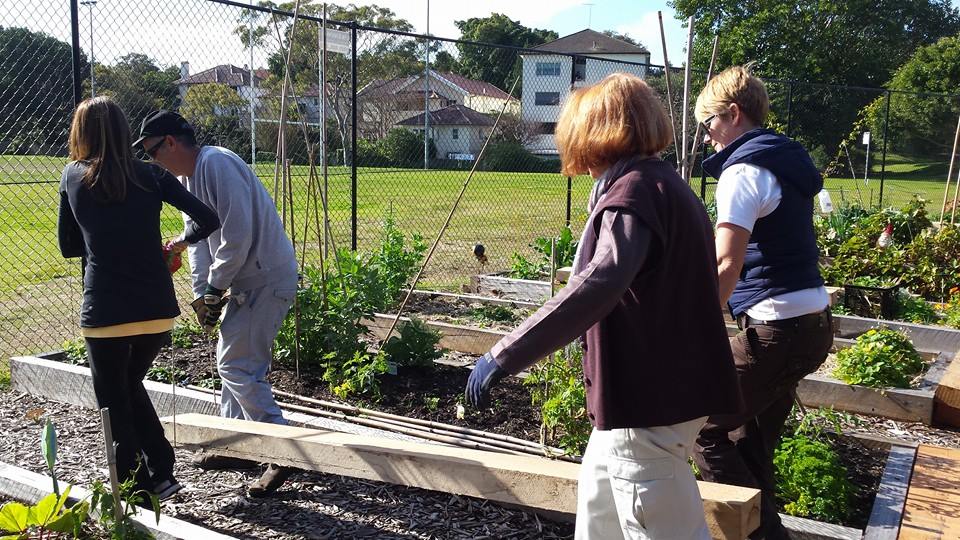
We’re in the process of building a second layer on our garden beds, that’s 36 beds, at least 144 pieces of timber. Here are some pics from our first working bee.

Categories
Companion planting

Companion Planting Guide

  1. Plant short, shade-tolerant plants beneath taller, bushy plants.
  2. When you mix sun-loving plants, put tall ones at the north end of the plot and small ones at the south end, so all will get needed sun.
  3. Plant herbs throughout the garden, especially basil, mint, sage, and dill.
    EXCEPTION: Keep dill away from carrots.
  4. Plant cosmos and French or Mexican marigold here and there in and near the garden to repel pests and encourage beneficials that prey on them.
  5. Do the same with chives, garlic, or onions EXCEPT near or amongst beans.
  6. Exploit the different maturation rates of different crops: plant lettuce, coriander, spinach, or chard early where you plan to set out squash and melons later, so that weeds don’t have a chance to move in, and you get two crops instead of just one.
  • Don’t mix dill with tomatoes or with carrots.
  • Don’t plant garlic, onions, or chives with beans.
  • Fennel does not mix well with most other plants; keep it in its own corner.

Read the full article at Planet Natural

Categories
Companion planting Nurse Planting

Beans, corn & zucchini
(the three sisters)

I recently came across this great tip (an ancient method used by the Native Americans)… Can’t wait to try it in plot 23 when spring arrives!

  1. Sow eight corn seeds in a circular pattern (6 inches between each seed)
  2. A couple of weeks later once the corn has sprouted, plant about four beans around each corn stalk
  3. A week after your beans have sprouted and begin to grow up the corn, take 6-8 zucchini seeds (or and seeds from the curcubit / gourd family) and plant them evenly spaced outside the ring of corn and beans.

Beans provide nitrogen for the nutrient-hungry corn, the corn provides a support for the beans, and the zucchini suppresses the weeds.